

By Julius Nsikak, Uyo
Former Military Governor of Akwa Ibom State, Colonel Yakubu Bako (Rtd), has reflected on some of the landmark projects initiated during his administration, revealing how early support for private investments by the man who is today Governor Umo Eno contributed to the state’s development trajectory.
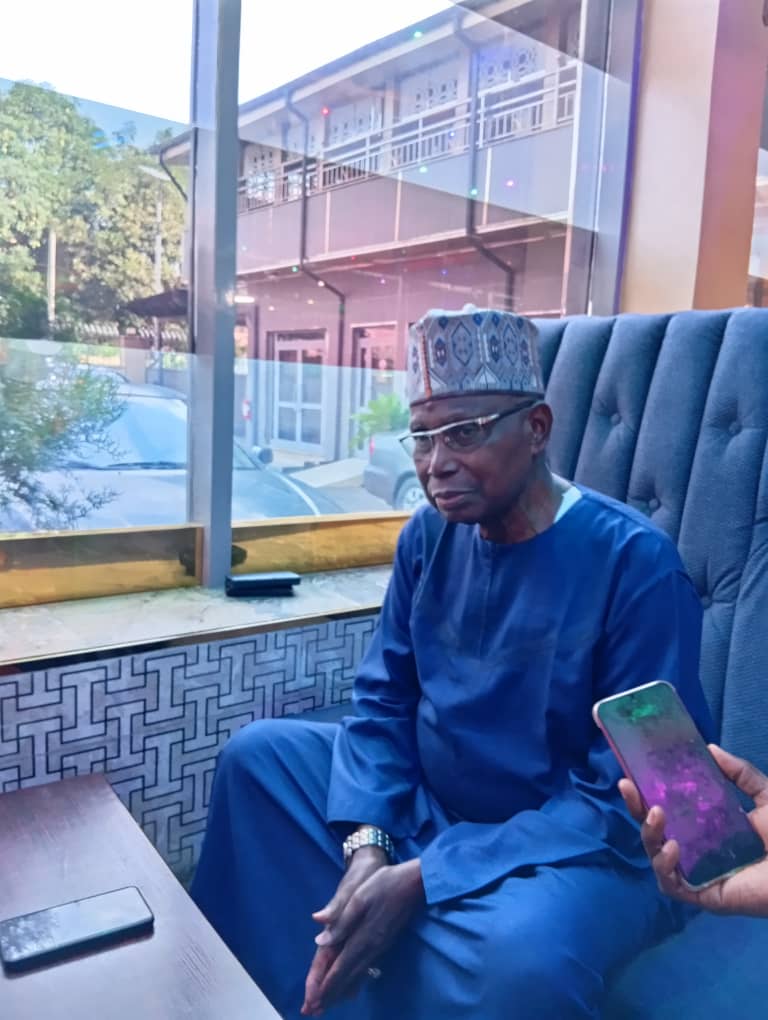
Speaking during an interview with journalists in Uyo, Bako recounted how key projects, including the present-day University of Uyo Teaching Hospital, the Ibom Golf Resort and Akwa Ibom House in Abuja, were conceived as strategic investments aimed at transforming Uyo from what he described as a “glorified town” into a modern state capital.
According to him, one of the major achievements of his administration was the establishment of the Sani Abacha Specialist Hospital, which later evolved into the University of Uyo Teaching Hospital.
“When I came into office, I was advised to leave a legacy that would reduce the need for our people to travel to Calabar and Enugu for specialised medical treatment. That was part of the thinking behind the hospital project,” he recalled.
Bako also shed light on his longstanding relationship with Governor Umo Eno, tracing it back to the governor’s days as a young entrepreneur seeking to invest in the hospitality sector.
According to the former military administrator, Eno approached him with plans to develop a hotel that would cater for expatriates working in the oil industry and contribute to the economic growth of the state.
“I remember when the gentleman came to my office and said he wanted to build a hotel because of the expatriates working with Mobil. He believed they needed a place to relax and stay, and I saw it as a development project for the state,” Bako said.
He disclosed that challenges arose after the Certificate of Occupancy granted for the project was revoked by government officials, prompting his intervention.
“He came back to me and said the Certificate of Occupancy I had approved had been revoked. I was angry. I called the relevant officials and directed them to restore it immediately. By the time I returned from an official trip, the matter had been resolved and he was happy again,” he said.
Bako further revealed that the project encountered repeated acts of sabotage during construction.
“When construction started, people would go there at night and destroy parts of the building. I deployed soldiers to secure the site because I believed it was an important investment for Akwa Ibom State,” he stated.
The retired military officer said rumours later emerged that the project belonged to him, an allegation he dismissed.
“Some people claimed the hotel was mine and that he was only fronting for me. That was never true. My interest was simply because I saw it as a project that would promote development and create opportunities for our people,” he explained.
Reflecting on the state’s progress, Bako noted that investments in tourism and recreation have helped reposition Akwa Ibom as a destination of choice.
“Today, people travel from Abuja and other parts of the country to play golf in Uyo. Before then, there was nothing like that. It shows the value of investing in tourism and recreation,” he said.
The former governor also revealed that he administered Akwa Ibom with only eleven commissioners, describing his government as lean but effective.
“I ran Akwa Ibom State with just eleven commissioners. We focused on delivering results and building institutions that would outlive us,” he said.
Comparing Uyo’s past and present, Bako expressed satisfaction with the city’s transformation.
“Uyo used to be a glorified town. Today, it is a true state capital and a destination people are proud to visit. The transformation has been remarkable,” he said.
He commended successive administrations for building on existing projects rather than abandoning them, noting that continuity in governance has been one of the state’s greatest strengths.
For Bako, the continued relevance of institutions such as the University of Uyo Teaching Hospital and tourism assets such as the Ibom Golf Resort serves as evidence that visionary leadership and long-term planning remain essential to sustainable development.