


By Julius Nsikak
Last weekend, I received a call from a STRANGE NUMBER.
The caller introduced himself as a member of a WhatsApp group and spoke with the confidence of someone who expected to be trusted.
He informed me that a meeting had been scheduled for 6 p.m. and politely asked whether I would be attending.
I replied that I would not.
He immediately informed me that an ATTENDANCE CODE had been sent to my phone and requested that I read it aloud so that my absence could be recorded.
The request struck me as unusual.
Without further discussion, I ended the call.
A few moments later, the same number called again.
I ignored it and moved on with my day.
At the time, I was not thinking about fraud.
I simply had no interest in continuing the conversation.
This weekend, however, a remarkably similar incident occurred.
Another caller contacted me from the number 07039031636.
He introduced himself as Bassey and claimed to be calling from the “Umo Eno Defenders Group”.
His message sounded familiar.
Too familiar.
He informed me that a meeting would be taking place later in the evening on WhatsApp and wanted to know whether I intended to participate.
Once again, I declined.
He then asked whether I had received a message containing a code.
He instructed me to minimise my screen, check the message and read the code back to him.
Curiosity got the better of me.
I checked the message.
There it was.
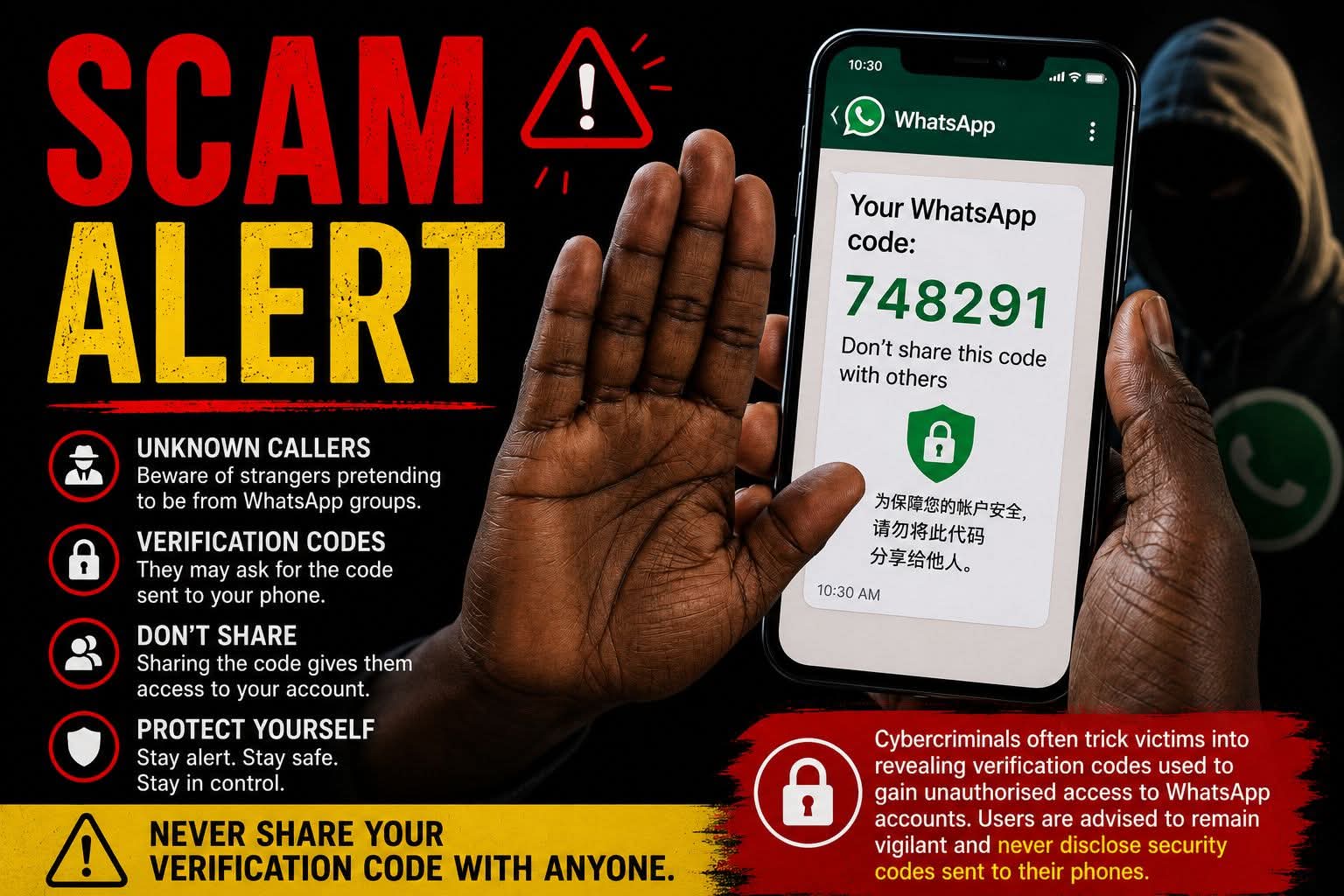
A verification code had arrived.
The message contained foreign characters and security warnings that clearly suggested the code was private.
The caller waited patiently for me to reveal it.
Instead, I began asking questions.
I wanted to know why the code was necessary.
I wanted to know why a simple attendance confirmation required access to a private verification message.
His explanations became increasingly weak.
The more he spoke, the less convincing he sounded.
Fortunately, a friend sitting beside me immediately recognised what was unfolding.
“That is a scammer,” he said.
And he was right.
The moment I challenged the caller, his confidence disappeared.
I firmly instructed him never to call my number again.
The conversation ended abruptly.
Only afterwards did I fully appreciate what had happened.
Over the past few months, I have heard colleagues complain that their WHATSAPP ACCOUNTS were suddenly taken over by unknown persons.
Many lost access without understanding how the breach occurred.
I often wondered what trick had been used.
Now I know.
The answer is surprisingly simple.
The code these fraudsters request is often the very key needed to gain access to your WhatsApp account.
Once that code is disclosed, control of the account can quickly change hands.
The victim is locked out.
The scammer gains entry.
The account becomes a weapon.
Friends can be deceived.
Family members can be manipulated.
Money can be solicited under false pretences.
Reputations can be damaged within minutes.
What is particularly concerning is that these individuals frequently exploit the names of legitimate groups and organisations.
In many cases, the groups themselves may have no connection whatsoever to the scam.
Yet their names are used as bait.
Some people seem determined to MAR THE REPUTATION OF OTHERS and DESTROY from places where they never sowed.
They borrow credibility that does not belong to them.
They exploit trust that they did not build.
They prey on familiarity because they know familiarity lowers suspicion.
This experience reminded me that DIGITAL SECURITY is no longer a concern reserved for technology experts.
It is now a responsibility for everyone.
Students are targets.
Professionals are targets.
Business owners are targets.
Journalists are targets.
Anyone with a smartphone is a potential target.
The first line of defence is awareness.
The second is caution.
The third is refusing to share information that was meant for your eyes alone.
Never share your verification code with anyone.
No genuine WhatsApp administrator will ask for it.
No legitimate group official will request it.
No authentic support representative will need it.
The code belongs to you and should remain with you.
Cybercriminals often trick victims into revealing verification codes used to gain unauthorised access to WhatsApp accounts.
Users are advised to remain vigilant and never disclose security codes sent to their phones.
As online fraud becomes increasingly sophisticated, vigilance is no longer optional.
It is essential.
Question unusual requests.
Verify unfamiliar claims.
Protect your information.
Guard your identity.
Stay alert.
Because in today’s digital world, a single code shared in a moment of trust can become the doorway to a costly mistake.