

By Julius Nsikak
In a recent Facebook comment, award-winning investigative journalist, Ibanga Isine noted that while the government is making efforts, the scale of intervention remains “like a drop of water in the ocean”, when weighed against the magnitude of challenges facing public education.
Primary School Ibiaku Itam in Itu Local Government presents a striking example.
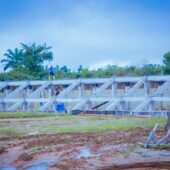
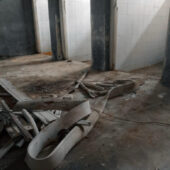
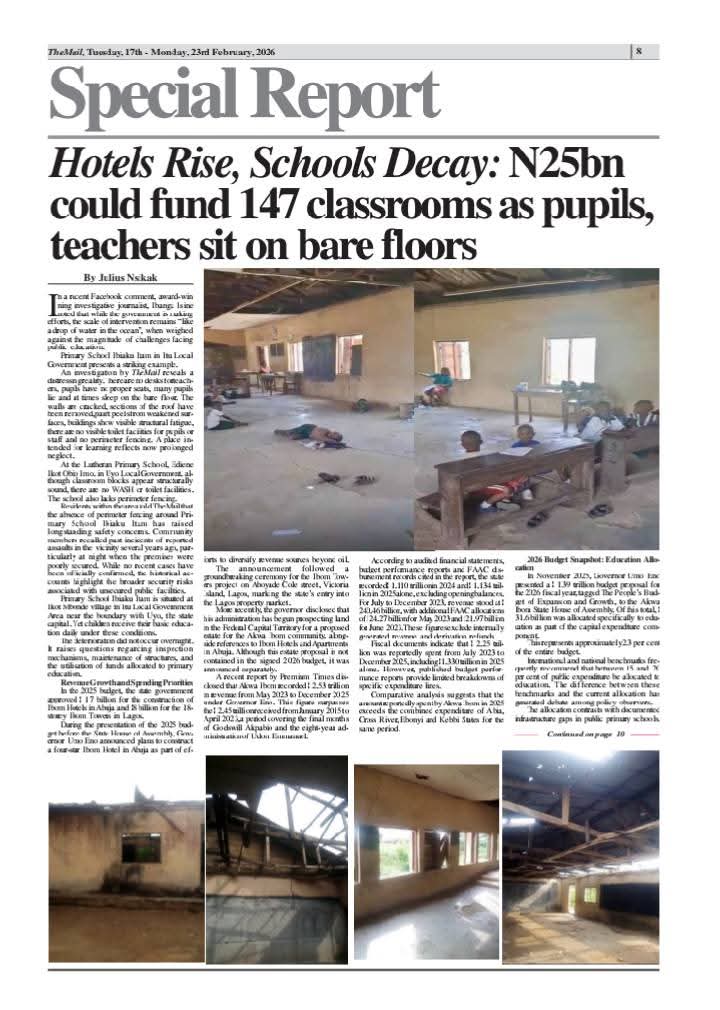
An investigation by TheMail reveals a distressing reality. There are no desks for teachers, pupils have no proper seats, many pupils lie and at times sleep on the bare floor. The walls are cracked, sections of the roof have been removed, paint peels from weakened surfaces, buildings show visible structural fatigue, there are no visible toilet facilities for pupils or staff and no perimeter fencing. A place intended for learning reflects now prolonged neglect.
At the Lutheran Primary School, Ediene Ikot Obio Imo, in Uyo Local Government, although classroom blocks appear structurally sound, there are no WASH or toilet facilities. The school also lacks perimeter fencing.
Residents within the area told TheMail that the absence of perimeter fencing around Primary School Ibiaku Itam has raised longstanding safety concerns. Community members recalled past incidents of reported assaults in the vicinity several years ago, particularly at night when the premises were poorly secured. While no recent cases have been officially confirmed, the historical accounts highlight the broader security risks associated with unsecured public facilities.
Primary School Ibiaku Itam is situated at Ikot Mbonde village in Itu Local Government Area near the boundary with Uyo, the state capital. Yet children receive their basic education daily under these conditions.
The deterioration did not occur overnight. It raises questions regarding inspection mechanisms, maintenance of structures, and the utilisation of funds allocated to primary education.
Revenue Growth and Spending Priorities
In the 2025 budget, the state government approved ₦17 billion for the construction of Ibom Hotels in Abuja and ₦8 billion for the 18-storey Ibom Towers in Lagos.
During the presentation of the 2025 budget before the State House of Assembly, Governor Umo Eno announced plans to construct a four-star Ibom Hotel in Abuja as part of efforts to diversify revenue sources beyond oil.
The announcement followed a groundbreaking ceremony for the Ibom Towers project on Aboyade Cole street, Victoria Island, Lagos, marking the state’s entry into the Lagos property market.
More recently, the governor disclosed that his administration has begun prospecting land in the Federal Capital Territory for a proposed estate for the Akwa Ibom community, alongside references to Ibom Hotels and Apartments in Abuja. Although this estate proposal is not contained in the signed 2026 budget, it was announced separately.
A recent report by Premium Times disclosed that Akwa Ibom recorded ₦2.53 trillion in revenue from May 2023 to December 2025 under Governor Eno. This figure surpasses the ₦2.45 trillion received from January 2015 to April 2023, a period covering the final months of Godswill Akpabio and the eight-year administration of Udom Emmanuel.
According to audited financial statements, budget performance reports and FAAC disbursement records cited in the report, the state recorded ₦1.110 trillion in 2024 and ₦1.134 trillion in 2025 alone, excluding opening balances. For July to December 2023, revenue stood at ₦240.46 billion, with additional FAAC allocations of ₦24.27 billion for May 2023 and ₦21.97 billion for June 2023. These figures exclude internally generated revenue and derivation refunds.
Fiscal documents indicate that ₦2.25 trillion was reportedly spent from July 2023 to December 2025, including ₦1.330 trillion in 2025 alone. However, published budget performance reports provide limited breakdowns of specific expenditure lines.
Comparative analysis suggests that the amount reportedly spent by Akwa Ibom in 2025 exceeds the combined expenditure of Abia, Cross River, Ebonyi and Kebbi States for the same period.
2026 Budget Snapshot: Education Allocation
In November 2025, Governor Umo Eno presented a ₦1.39 trillion budget proposal for the 2026 fiscal year, tagged The People’s Budget of Expansion and Growth, to the Akwa Ibom State House of Assembly. Of this total, ₦31.6 billion was allocated specifically to education as part of the capital expenditure component.
This represents approximately 2.3 per cent of the entire budget.
International and national benchmarks frequently recommend that between 15 and 20 per cent of public expenditure be allocated to education. The difference between these benchmarks and the current allocation has generated debate among policy observers.
The allocation contrasts with documented infrastructure gaps in public primary schools, including inadequate classrooms, insufficient desks and absence of WASH facilities.
Calls for Educational Reform
A public policy analyst, who requested anonymity, stated that while investments outside the state may generate long term returns, current data on primary education infrastructure indicates substantial unmet needs.
The analyst noted that challenges remain visible in teacher sufficiency, learning environments and rural infrastructure.
Another anonymous source described publicly announced upgrades within the education sector as limited in scale when compared to available revenue. According to the source, the number of renovated school blocks remains relatively small when assessed against overall fiscal inflows.
Regarding pupils sitting or sleeping on bare floors during school hours, the source described the situation as inconsistent with the revenue profile of an oil producing state.
The same source questioned the level of publicly accessible documentation on out of state projects, including Ibom Hotels in Abuja and Ibom Towers in Lagos, noting that detailed implementation records are not widely available in the public domain.
The source added that improved transparency in procurement, project costing and implementation tracking would strengthen public confidence.
Commissioner for Education Unreachable
Efforts to obtain an official response from the Ministry of Education regarding the state of public schools, including Government Primary School, Ibiaku Itam in Itu Local Government, proved unsuccessful.
Our reporter contacted the Commissioner for Education, Prof Ubong Essien, on multiple occasions via mobile calls and WhatsApp messages but received no response.
No official clarification was provided regarding classroom conditions, desk shortages, WASH facilities or infrastructure rehabilitation plans.
Citizens Speak: Education Standards Under Review
An anonymous journalist and civil society mediator assessed the current state of education in Akwa Ibom State at four out of ten, compared to six under the previous administration. The source attributed this assessment to teacher shortages, infrastructure gaps and limited learning materials.
The source also referenced shared responsibility between communities and government in safeguarding public assets.
On out of state developments, the source questioned the timing of large capital projects outside Akwa Ibom while infrastructure needs persist locally.
The source concluded that improved accountability mechanisms and strategic planning are central to long term reform.
Rotaract Insight: Emerald Udom on WASH and Education
Emerald Udom, president of the Rotaract Club of Uyo City and managing director of Greenstone Farms, emphasised on the link between sanitation and learning outcomes.
According to Udom, the absence of clean water and functional toilets in many public primary schools affects concentration, attendance and long-term educational performance.
Udom noted that inadequate WASH facilities increase exposure to illnesses such as diarrhoea, cholera and typhoid which disrupt schooling. The impact on the girl-child is particularly significant during menstruation where absence of private facilities may result in absenteeism.
Udom stated that schools with improved water and sanitation infrastructure typically record higher attendance and reduced health-related disruptions.
Expert View: Costs and Reallocation Scenarios
Samuel Ekung, a quantity surveyor, provided cost estimates for school infrastructure.
A standard six-classroom block in upland local government areas, covering approximately 405 square metres and finished with floor tiles, casement windows, plaster of Paris ceilings, acrylic paint, long span timber roofing and basic furniture, would cost between ₦170 million and ₦180 million per block.
Based on these estimates, the ₦25 billion allocated to Ibom Hotels and Ibom Towers projects could fund approximately 145 to 147 six classroom blocks.
Alternatively, the same sum could comprehensively upgrade 50 primary health centres at an estimated ₦500 million per facility, including clinical wards, staff quarters, hybrid solar boreholes, fencing and street lighting.
Ekung noted that prioritisation decisions ultimately depend on policy direction and developmental goals.
Visible Conditions and Fiscal Capacity
The condition of Government Primary School Ibiaku Itam remains observable. Pupils sit on bare floors. Teachers lack desks, and toilet facilities are absent.
Revenue figures for the state are publicly documented, budget allocations are formally presented, and expenditure totals are reported.
The intersection between fiscal capacity and on ground infrastructure outcomes remains central to the ongoing debate.
Education stakeholders maintain that strategic, transparent and prioritised investment in primary education infrastructure would significantly improve learning conditions across the state.
For pupils in Ibiaku Itam and similar schools, classroom conditions continue to reflect infrastructure gaps. The broader policy question concerns how available resources will be allocated in future budget cycles to address those gaps.
Education remains a foundational sector for long term economic and social development. The alignment between revenue strength and classroom realities will continue to shape public discourse in Akwa Ibom State.
This report was first published on 17th February 2026 in TheMail Newspaper.