

By Julius Nsikak
A viral video exposing the deteriorating condition of Government Primary School, Ibiaku Itam in Ikot Mbonde, Itu Local Government Area, has brought renewed attention to education funding and infrastructure management in Akwa Ibom State.
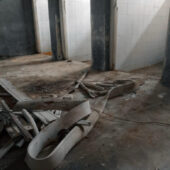
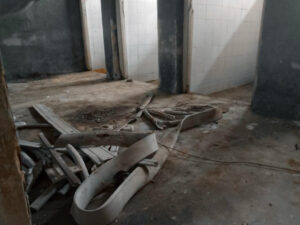
The footage, which circulated widely on social media, showed damaged ceilings, broken desks, stripped fittings and pupils seated on bare floors. Public outrage followed swiftly, raising questions not only about vandalism but also about maintenance systems and budget priorities within the state’s education sector.
In response, the State Commissioner for Education, Professor Ubong Umoh, paid an on the spot visit to the school. During the inspection, he described the situation as unacceptable and attributed much of the destruction to vandalism. He urged residents, parents and traditional leaders to work together to safeguard public school infrastructure.
A source told TheMail that a panel has been established to review the conduct of the head teacher in connection with the circulation of the video, as part of efforts to ensure accountability and adherence to school management protocols.
While the Commissioner’s visit reassured many that government attention had been drawn to the issue, it also reopened a deeper conversation about how public schools are funded, maintained and protected across the state.
The Budget Reality
In November 2025, Governor Umo Eno presented a proposed N1.39 trillion budget for the 2026 fiscal year to the State House of Assembly. Titled “The People’s Budget of Expansion and Growth”, the proposal allocated N31.6 billion to education capital expenditure.
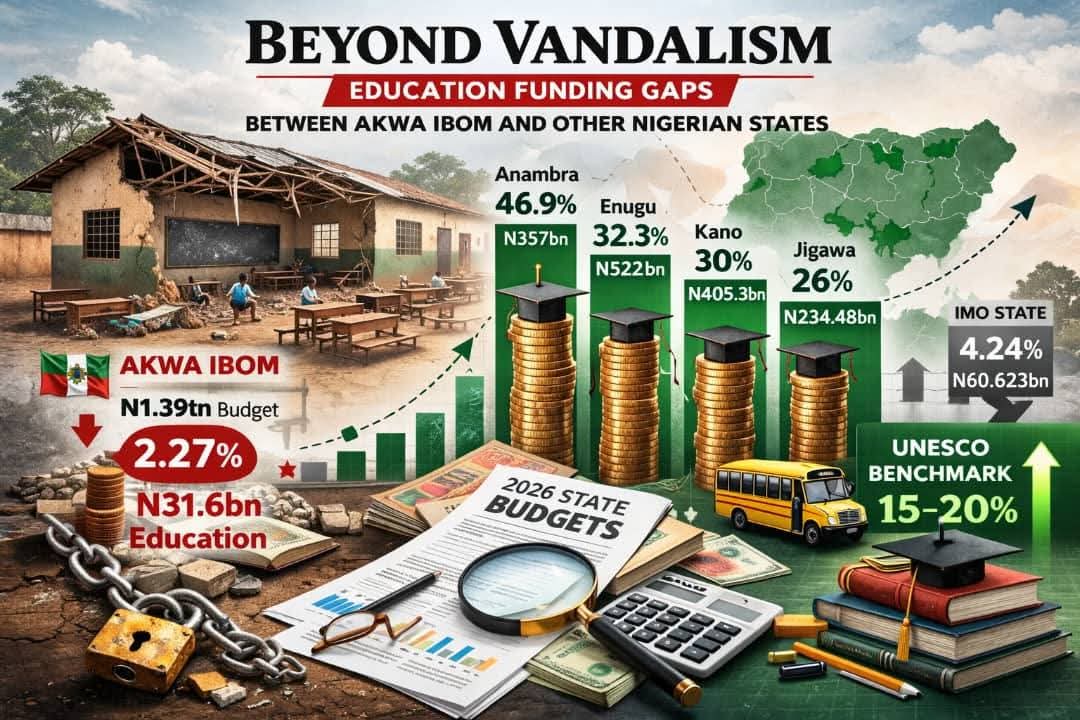
Of the total N1.39 trillion appropriation, capital expenditure accounted for N1.035 trillion, while recurrent expenditure stood at N354.867 billion. Within the capital component, N31.6 billion was assigned to education, representing approximately 2.27 per cent of the entire budget.
By comparison, N387.5 billion was allocated to roads and infrastructure, while N136.1 billion went to health. Although education is funded, the figures indicate that it occupies a relatively modest share of the overall capital plan.
Publicly available budget summaries do not clearly itemise allocations for routine school maintenance, perimeter security or structured asset protection. Without such detail, it is difficult to determine how much is devoted to preserving existing facilities as opposed to constructing new ones.
A National Comparison
Placing Akwa Ibom’s allocation in a broader national context highlights striking differences in fiscal prioritisation across Nigeria.
While Akwa Ibom dedicates just 2.27 per cent of its N1.39 trillion 2026 budget to education, several other states have committed far larger proportions of their total expenditure to the sector.
Anambra State currently leads nationwide, allocating N357 billion to education out of a N757 billion budget, representing 46.9 per cent.
Enugu State follows with N522 billion of its N1.62 trillion 2026 budget devoted to education, equivalent to 32.3 per cent. The state has consistently earmarked over 30 per cent of its total budget for education in recent fiscal cycles. For 2026, funding is expected to support infrastructure upgrades, teacher recruitment and flagship initiatives such as Smart Green Schools, alongside N30 billion set aside for school feeding programmes.
Kano State has allocated N405.3 billion out of N1.368 trillion, amounting to 30 per cent. Jigawa State committed N234.48 billion, representing 26 per cent of its N901.84 billion budget.
Other states approaching or exceeding international benchmarks include Kaduna State at 25 per cent, Abia State at 20 per cent and Taraba State at about 20 per cent.
States with notable but comparatively lower allocations include Kogi State, Katsina State, Oyo State, Nasarawa State, Ogun State and Kebbi State, all ranging between 16 and 18 per cent.
In contrast, Imo State allocated N60.623 billion out of N1.43 trillion, representing 4.24 per cent, placing both Imo and Akwa Ibom well below many national peers.
The United Nations Educational, Scientific and Cultural Organization recommends that countries allocate between four and six per cent of Gross Domestic Product or between 15 and 20 per cent of total public expenditure to education. Several states fall short of this benchmark, including Adamawa State, Bayelsa State, Delta State, Gombe State, Lagos State, Niger State and Zamfara State.
In some cases, education funding is subsumed under broader social services classifications that also cover health, housing and social protection. These include Cross River State, Edo State, Plateau State, Yobe State, Kwara State and Ebonyi State, where precise education figures are not clearly itemised.
Revenue Growth and Fiscal Capacity
Akwa Ibom’s revenue profile reflects significant federal inflows through the Federation Account Allocation Committee, alongside internally generated revenue and derivation funds.
Over the past three years, FAAC allocations have risen steadily. In 2023, the approved budget allocated N486 billion to government. This increased to N746 billion in 2024 and rose again to N755 billion in 2025.
The consistent growth in these inflows strengthens the state’s fiscal capacity. It also raises questions about how expanding revenue is distributed across sectors, particularly education, which remains a relatively small component of the capital framework.
SUBEB and Infrastructure Transparency
The Akwa Ibom State Universal Basic Education Board is responsible for implementing basic education infrastructure projects. Historical budget data indicates that approved allocations for classroom facilities, furniture and minor capital works are modest relative to total education spending.
Federal matching grants administered by the Universal Basic Education Commission provide additional funding opportunities. However, these grants require counterpart funding from the state government in order to be fully accessed.
There is limited publicly available information detailing how much is spent annually on routine classroom maintenance, furniture replacement or water and sanitation facilities. This transparency gap makes it difficult for the public to assess the effectiveness and adequacy of infrastructure spending.
Vandalism and Preventive Systems
Government officials maintain that the damage at Ibiaku Itam Primary School was largely the result of vandalism. Structural damage and missing fittings suggest deliberate interference.
Concerns about vandalism are not new. In late 2022, a member of the Universal Basic Education Board expressed alarm over the removal and destruction of school infrastructure, including wash hand basins and water tanks. Communities were urged to safeguard public property provided for pupils.
However, vulnerability to vandalism often reflects weaknesses in preventive systems. Many public schools lack perimeter fencing, adequate lighting, night time supervision and dedicated security personnel. Current budget documents do not clearly indicate specific allocations for school based security personnel or preventive maintenance systems. The absence of such provisions may result in higher repair costs over time.
Executive Response and Community Responsibility
Governor Umo Eno has taken a firm stance on vandalism. During a State Government House Monthly Prayer Service in Uyo, he warned that village heads could be held accountable for destruction of government property within their domains. He stated that where public facilities are repeatedly vandalised, the certificate of the affected village head could be withdrawn.
He also directed the Commissioner for Local Government and Chieftaincy Affairs and the State Chairman of the Association of Local Government of Nigeria to convene a meeting with village heads across the state.
The directive signals an increased emphasis on community level accountability. While enforcement may deter deliberate destruction, sustainable protection of school facilities may also depend on systematic investment in fencing, lighting, maintenance planning and security personnel.
Perimeter Fencing and Policy Consistency
The fencing of public schools has featured intermittently in state infrastructure planning. Budget records indicate that in 2019, N221 million was allocated for perimeter fencing across nine primary schools. Additional funds were provided for steel gates and security posts, bringing the average expenditure to roughly N24.5 million per school.
In the 2026 budget, fencing projects are again included within the education capital plan, with three schools identified. However, specific allocation figures are not clearly detailed, and there is no comprehensive public record confirming full implementation of earlier fencing initiatives.
Given that the state operates more than one thousand public primary schools, the scale of fencing projects appears limited in relation to overall need.
Water, Sanitation and Learning Conditions
Beyond vandalism, the condition of water and sanitation facilities in many schools highlights broader infrastructure challenges. Access to clean water and functional toilets remains inconsistent.
These deficiencies cannot be attributed solely to vandalism. They raise important questions about comprehensive facility upgrades and sustained investment in water, sanitation and hygiene infrastructure, which is essential for pupil attendance, health and dignity.
The Broader Question
Community leaders and residents play an important role in protecting public property. However, infrastructure funding, procurement oversight, maintenance planning and monitoring remain core responsibilities of government.
Greater clarity in budget line items, particularly those related to maintenance and security, would strengthen public confidence and accountability.
The Commissioner’s visit to Ibiaku Itam Primary School demonstrated responsiveness to public concern. Yet the issue extends beyond a single incident.
The central question is no longer simply who damaged school property. It is whether the state’s budgeting framework is structured to protect, maintain and sustain public education infrastructure over the long term.
If public attention shifts from reacting to isolated cases of vandalism to examining systemic funding and maintenance practices, the current debate may contribute to meaningful reform in the education sector.
This report was first published on 24th February 2026 in TheMail Newspaper.