

…As poor maintenance raises accountability concerns
By Julius Nsikak
The Akwa Ibom State House of Assembly Committee on Local Government and Chieftaincy Affairs has put local government administrations across the state on notice, insisting that financial autonomy must be reflected not only in projects but also in the condition of public institutions entrusted with democratic governance.
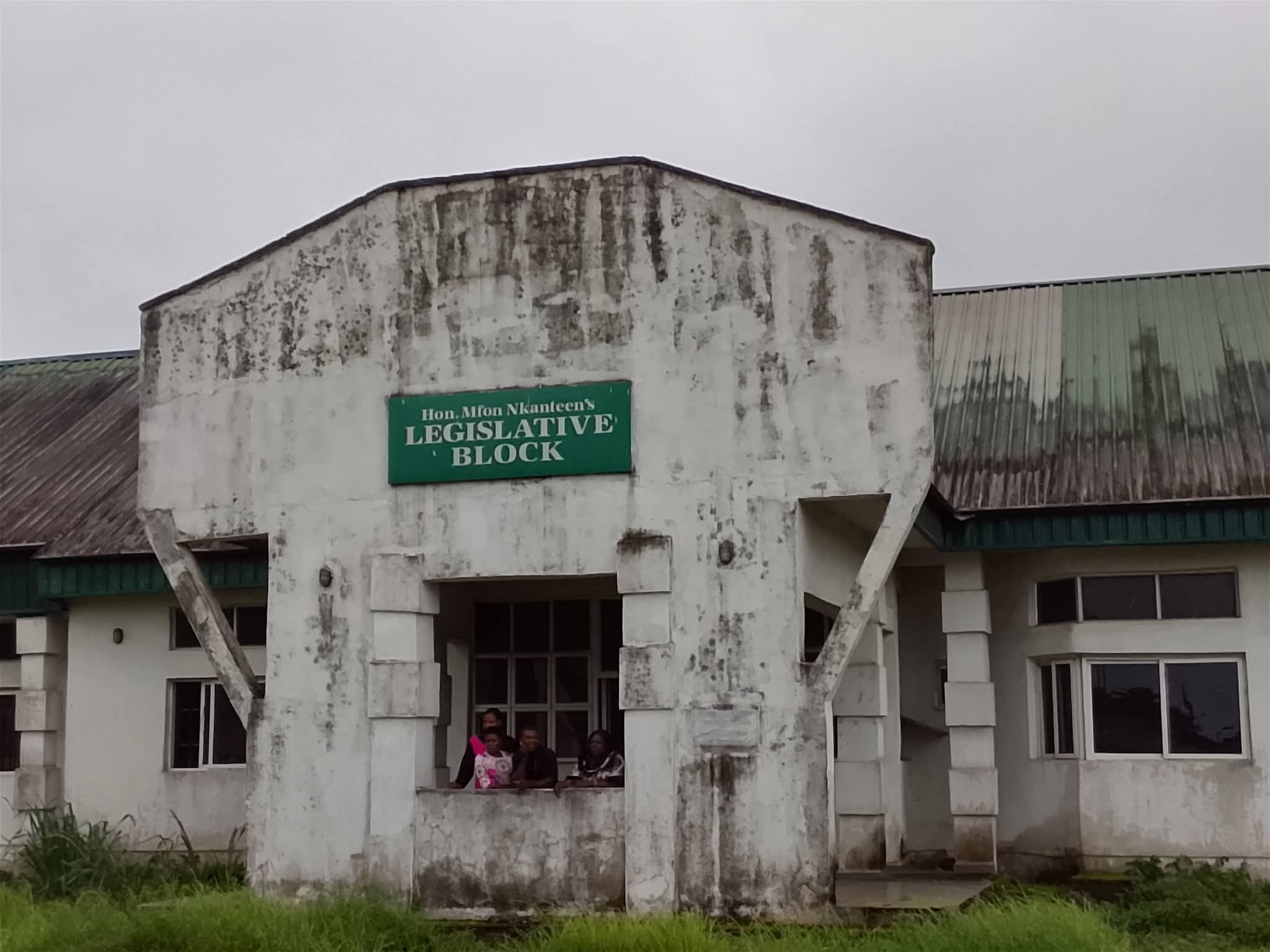
The warning came during the first day of the Committee’s oversight tour of the state’s 31 local government councils, where members were visibly dissatisfied with the state of the Mkpat Enin Local Government Legislative Council complex, a facility that serves as the seat of the council’s lawmaking arm.
Led by the Chairman of the Committee, Rt. Hon. Mfon Idung, the lawmakers expressed disappointment at the deteriorating appearance of the legislative block, describing the condition of the building as inconsistent with the expectations of a council that now receives its statutory allocation directly.
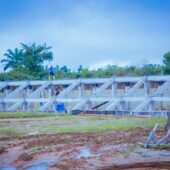
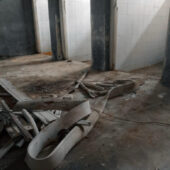
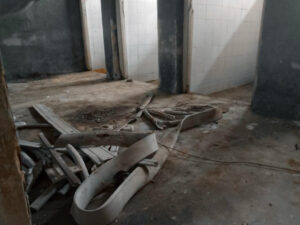
The neglected structure, with its weather stained walls, ageing roof, overgrown surroundings and poor maintenance, immediately drew the attention of the Committee upon arrival. The inspection raised concerns over the priorities of the council administration and the level of commitment to preserving institutions that are central to grassroots democracy.
Following an interaction with the Chairman of Mkpat Enin Local Government Council, Hon. Emmanuel Inyang, the Committee sought an explanation for the condition of the legislative complex.
Responding, the council chairman said, “I instructed the Leader of the Legislative Council as far back as January to submit a proposal for the renovation of the legislative chamber, but up till today, the proposal has not been submitted.”
The explanation, however, appeared to do little to ease the Committee’s concerns.
When the Leader of the Legislative Council, Hon. Nyakno Ekpo was invited to respond, he offered no defence regarding the delay, leaving members of the Committee questioning the apparent lack of urgency in maintaining the institution.
Beyond the physical state of the legislative chamber, the Committee also observed what appeared to be a strained working relationship between the executive and legislative arms of the council.
The lawmakers stressed that while healthy checks and balances remain essential in governance, unnecessary friction between both arms ultimately undermines development and service delivery to the people. They urged both sides to strengthen collaboration in the overall interest of the council area.
In the course of the engagement, the Leader of the Legislative Council disclosed that only nine out of the fifteen councillors had received furniture allowances from the council chairman, a revelation that further prompted discussions around equity, transparency and the welfare of elected representatives.
The inspection equally exposed concerns extending beyond the council chambers.
Meanwhile, residents who spoke anonymously lamented the absence of decent and accessible public toilet facilities within the council premises, describing the situation as both embarrassing and unhealthy.
They alleged that the lack of proper conveniences has encouraged indiscriminate disposal of human waste around parts of the council environment, raising public health concerns.
A walk around the secretariat by this reporter revealed an environment overtaken by overgrown vegetation, stagnant pools of water and poorly maintained surroundings, creating an appearance that contrasted sharply with the expectations attached to a public institution responsible for administering one of Akwa Ibom’s local government areas.
For many observers, the visit underscored why legislative oversight remains indispensable. Beyond reviewing financial records, it offered an opportunity to assess whether public institutions reflect the accountability, transparency and standards expected under the state’s local government autonomy framework.
As the Committee continues its inspection of all 31 local government councils, the message from Mkpat Enin was unmistakable.
Financial autonomy is not just about receiving allocations. It is about demonstrating responsible leadership, maintaining public assets and ensuring that every arm of local government functions in an environment that inspires public confidence rather than public concern.