

…Committee Inspects Projects Across Six Councils, Vows Strict Accountability
By Julius Nsikak
The Akwa Ibom State House of Assembly has warned chairmen of the state’s 31 local government councils that financial autonomy must translate into measurable development, insisting that public funds should be invested in projects that improve livelihoods rather than end up as abandoned structures.
The warning was the central message of the House Committee on Local Government and Chieftaincy Affairs as it continued its statewide oversight exercise to assess projects, scrutinise expenditure and determine whether increased allocations to local government councils are delivering tangible benefits to citizens.
For the lawmakers, the exercise extends beyond inspecting roads and buildings. It is designed to establish whether public resources are being transformed into better healthcare, improved infrastructure, stronger local economies and a higher quality of life across the state’s 31 local government areas.
Leading the delegation, the committee chairman and member representing Etim Ekpo/Ika State Constituency, Rt. Hon. Mfon Idung, said the Assembly was discharging one of its constitutional responsibilities by ensuring transparency and accountability in the management of public funds.
“This is not a witch hunt,” Idung said. “Our responsibility is to inspect projects, verify how public funds are utilised and ensure that local government resources are used for the benefit of the people.”
The oversight exercise, which began with visits to Mkpat Enin, Eastern Obolo and Ikot Abasi Local Government Areas before proceeding to Obot Akara, Ikot Ekpene and Essien Udim, exposed lawmakers to a combination of completed projects and ongoing infrastructure aimed at improving service delivery at the grassroots.
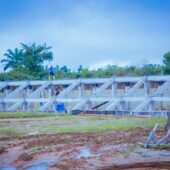
At Obot Akara Local Government Area, the committee inspected a modern healthcare centre under construction at Ikot Abia, Ward Three.
Explaining the scope of the project, the council’s Director of Works, Mr. Otobong Charles, said the facility would comprise male and female wards, a general ward, waiting area, doctors’ and nurses’ quarters, a kitchen, laundry, gatehouse and a 70KVA generator. According to him, the project has reached about 60 per cent completion.
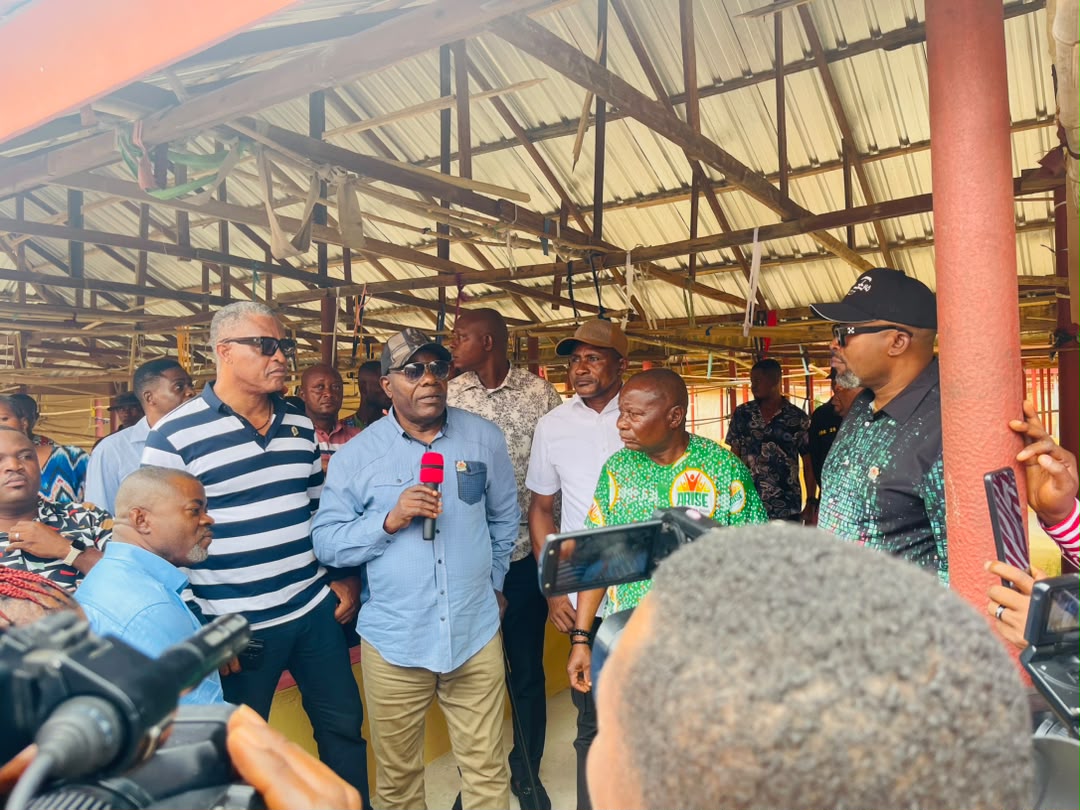
The lawmakers also inspected a newly constructed daily market comprising an abattoir, 40 lock up shops and public conveniences, alongside the roofed stadium at Nto Edino and other projects executed by the council.
Commending the scale of development, Idung said the projects reflected the purpose of granting financial autonomy to local government councils.
“These are major projects capable of transforming lives and stimulating economic activities. This is exactly why funds are released directly to local government councils,” he said.
He warned that every ongoing project must be completed to prevent waste of public resources “We do not want local government funds to be wasted. Every project currently under construction must be completed. Chairmen should ensure that available funds are properly channelled towards completing these projects so they do not become abandoned.”
The committee announced that it would return to Obot Akara within two months to assess progress on the healthcare centre.
Also speaking, Chairman of the House Committee on Health who is also a member of the touring committee, Hon. Moses Essien, described the healthcare facility as a strategic investment that would improve access to quality medical services for residents.
According to him, the market project would equally stimulate commercial activities while increasing internally generated revenue for the local government.
Residents of Obot Akara expressed satisfaction with the projects executed by the council, describing them as visible evidence of development within their communities.
The committee later visited Ikot Ekpene Local Government Area, where the council chairman, Hon. Aniefiok Nkom, presented projects undertaken by his administration. Lawmakers commended the projects, describing them as impactful and beneficial to residents.
The final stop of the second day was Essien Udim Local Government Area, where the council chairman, Hon. Ntiedo Usoro, showcased projects spanning infrastructure, education, healthcare, security and youth empowerment.
The projects include the construction of a 1.2 kilometre entrance road to the council secretariat, digitisation of council operations through the procurement of computers, restoration of electricity and potable water supply, rehabilitation of rural roads, construction of more than 1,300 market stalls across three major markets, installation of transformers in selected communities, free medical outreach programmes and empowerment initiatives targeting women, widows and young people.
Other interventions include tuition support for students studying Law and Naval related courses, improved welfare for traditional rulers, support for security agencies, staff welfare initiatives, land acquisition for selected youths and other community development projects.
The second phase of the oversight exercise followed what lawmakers described as an encouraging first day of inspections.
In Ikot Abasi Local Government Area, the committee inspected a 1.7 kilometre road with dual drainage funded entirely by the local government council and already about 85 per cent completed.
The project attracted particular attention after committee members initially questioned whether it had indeed been financed solely by the council. Following the inspection, the lawmakers acknowledged it as evidence of what local government autonomy can achieve when public funds are properly managed.
Idung attributed the growing number of development projects across several councils to Governor Umo Eno’s decision to allow local government allocations to reach the councils without interference.
He also commended President Bola Tinubu for reforms that have strengthened funding to local government councils.
According to him, financial autonomy carries greater responsibility, making legislative oversight essential to ensuring that increased allocations result in measurable improvements in the lives of citizens.
“Our responsibility does not end with listening to presentations,” he said. “We must physically verify every claim, examine expenditure and ensure that every naira allocated to local government councils delivers value to the people.”
The committee disclosed that its findings would be compiled into a comprehensive report for presentation before the House during plenary before its recommendations are forwarded to Governor Umo Eno.
As the oversight exercise continues across the remaining local government areas, the Assembly maintained that financial autonomy must be matched by accountability, insisting that every naira entrusted to local government councils should produce visible development and lasting benefits for the people of Akwa Ibom State.