

By Julius Nsikak
For more than twenty years, the Ibom Deep Seaport has occupied a unique place in Akwa Ibom State’s development narrative. Conceived as a transformational maritime infrastructure project capable of reshaping the state’s economy, the proposed seaport has been promoted by successive administrations as a gateway to industrialisation, international trade and long-term economic diversification.
Yet, despite surviving four administrations, attracting federal approvals, featuring prominently in development plans and receiving sustained political attention, the project remains largely unbuilt. The result is a development initiative that has generated enormous public expectations while simultaneously raising difficult questions about implementation, transparency, investor commitment and the politics surrounding its location.
An examination of official records, government pronouncements, budget documents and stakeholder perspectives reveals a project whose promise remains as significant as the controversies that continue to surround it.
The Birth of a Maritime Vision:
The idea of establishing a deep seaport along the Akwa Ibom coastline gained prominence during the administration of former Governor Victor Attah between 1999 and 2007. At a time when many oil-producing states were seeking ways to diversify their economies, the proposed seaport was presented as a strategic investment capable of unlocking the state’s maritime potential and reducing dependence on oil revenue.
Economic planners argued that Akwa Ibom’s extensive coastline, proximity to international shipping routes and growing industrial ambitions made it a suitable candidate for a modern deep seaport. Beyond serving as a cargo terminal, the facility was envisioned as a catalyst for industrial growth, logistics services, manufacturing and employment generation.
What began as a long-term development concept would eventually evolve into one of the most ambitious infrastructure projects ever proposed in the state.
From Vision to Government Policy:
The project gained greater visibility during the administration of former Governor Godswill Akpabio. During this period, the proposed seaport became a recurring feature of government communications, investment discussions and economic development plans.
It was also during this era that Ibaka became firmly associated with the project in the minds of many residents, particularly within Oro Nation. Stakeholder engagements, public presentations and official pronouncements frequently referenced Ibaka as the proposed location of the Deep Seaport, creating expectations that the coastal community would eventually host one of Nigeria’s most significant maritime infrastructure projects.
The momentum continued under Governor Udom Emmanuel, whose administration incorporated the Deep Seaport into a broader industrialisation agenda. The proposed Ibom Industrial City was conceived as a complementary development intended to maximise the economic benefits of the seaport and position Akwa Ibom as a regional investment destination.
Federal approvals followed. In 2016, the Federal Government approved concession arrangements for selected deep seaport projects, including the Ibom Deep Seaport. Four years later, the Federal Executive Council approved the commencement of the project, a development celebrated by state officials as a major breakthrough.
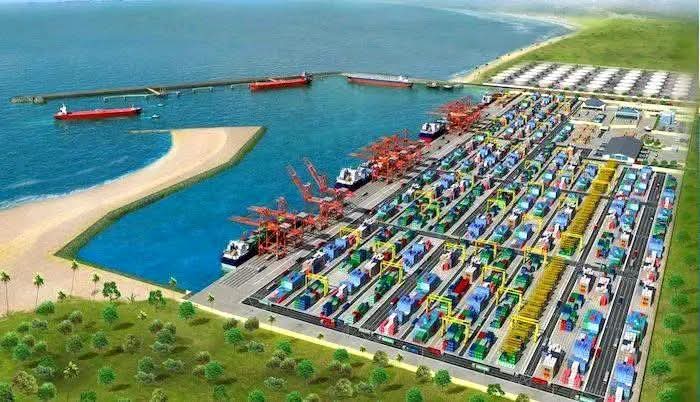
Project documents estimated the investment requirement at approximately 4.2 billion United States dollars, with plans for container terminals, dry bulk facilities, liquid bulk operations and general cargo handling infrastructure.
Yet despite these milestones, construction failed to progress beyond the planning stage.
A Project That Refuses to Disappear:
The administration of Governor Umo Eno inherited both the promise and the challenges associated with the project.
Government officials have consistently maintained that the Ibom Deep Seaport remains a priority development initiative. Recent feasibility studies, renewed investor engagement efforts and continued budgetary provisions suggest that the project remains active within government planning frameworks.
However, the passage of time has also intensified public scrutiny.
For many residents, the central question is no longer whether the state needs a deep seaport. Rather, the concern is why a project that has enjoyed political support across four administrations has yet to transition from policy documents and official speeches to physical construction.
The Controversy Over Location:
No aspect of the Ibom Deep Seaport has generated more public debate than the question of location.
For many stakeholders in Oro Nation, the project is inseparable from Ibaka. Historical references, previous government communications and official documents have contributed to a widespread perception that Ibaka was not merely a proposed location but the location around which the project was originally conceived.
Consequently, suggestions that the project may have evolved beyond its earlier framework have generated concern among some stakeholders.
Several individuals interviewed during the course of this investigation argued that their concerns are rooted in accountability rather than ethnic sentiment. They contend that where major public projects undergo significant modifications, government owes citizens clear explanations regarding what changed, why those changes occurred and how decisions were reached.
Government officials, on the other hand, maintain that infrastructure projects of this scale must be guided by technical feasibility, environmental considerations, navigational realities and investor requirements. According to this position, long-term sustainability rather than historical expectation must ultimately determine project decisions.
The tension between these competing perspectives continues to shape public discourse surrounding the project.
Following the Public Money:
One of the most persistent questions concerns expenditure.
A review of public budget documents shows that the Ibom Deep Seaport has consistently appeared within government development plans and budgetary frameworks. Dedicated institutional structures have been created to oversee aspects of the project, while allocations have been made for planning activities, studies, engineering services and project development.
Despite these allocations, determining the total amount spent on the project since its inception remains difficult. Information relating to expenditure is dispersed across multiple budget cycles, ministries and agencies, making comprehensive analysis challenging.
Transparency advocates argue that publishing a consolidated expenditure record would help improve public confidence and provide citizens with a clearer understanding of how resources allocated to the project have been utilised.
Investors, Studies and Lingering Questions:
The project’s prolonged gestation has also raised questions about investor participation and technical assessments.
Successive administrations have announced varying levels of investor interest. Feasibility studies have been commissioned. Technical reviews have been conducted. Yet commercial operations remain a distant prospect.
Available records indicate that a fresh feasibility report was submitted to the Akwa Ibom State Government in 2026, suggesting that technical evaluation of the project is still ongoing more than two decades after the concept first emerged.
The existence of multiple studies has generated further questions. Have the various assessments reached similar conclusions regarding location and commercial viability? Were there significant differences between earlier and later recommendations? What role have investor requirements played in shaping project decisions?
The absence of publicly available answers to many of these questions continues to fuel speculation.
What the Government Says
In response to concerns surrounding the project, government officials have repeatedly reaffirmed their commitment to the Ibom Deep Seaport.
The administration of Governor Umo Eno describes the project as a strategic economic asset capable of driving industrialisation, maritime trade, employment generation and investment attraction. Officials have also pointed to ongoing feasibility assessments, investor engagement efforts and budgetary provisions as evidence that work on the project remains active.
Government representatives further argue that projects of this magnitude require extensive technical studies, regulatory approvals, financing arrangements and investor confidence before construction can commence.
While these explanations have reassured some observers, others continue to call for greater transparency regarding expenditure, implementation timelines, investor commitments and the findings of technical studies.
Between Development and Politics:
The Ibom Deep Seaport occupies a unique position within Akwa Ibom’s political landscape.
For supporters, it represents one of the state’s most important economic opportunities and a project whose implementation requires patience, technical diligence and substantial capital investment.
For critics, it has become an enduring symbol of deferred promises, recurring announcements and unrealised expectations.
What is clear is that the project continues to generate debate precisely because of its potential significance. A successful deep seaport would have far-reaching implications for trade, industry, employment and revenue generation. Failure to deliver it would represent the loss of a major development opportunity.
More than two decades after it first entered public discourse, the Ibom Deep Seaport remains a project defined by both promise and uncertainty.
Federal approvals have been secured. Feasibility studies have been conducted. Investors have been courted. Budgetary provisions have been made. Yet construction has not commenced and commercial operations remain unrealised.
Whether the delays stem from technical challenges, financial realities, regulatory hurdles, investor concerns or political considerations, the result is the same: one of Akwa Ibom State’s most ambitious infrastructure projects remains unfinished.
Until construction begins and operations commence, questions regarding implementation, accountability and direction will continue to follow the project.
For now, the dream remains alive.
Whether it eventually becomes a maritime success story or another chapter in Nigeria’s long history of delayed infrastructure projects is a question that only time can answer.
Julius Nsikak is a development journalist writing from Akwa Ibom State, where the promise of a deep seaport has lingered for more than two decades.