

By Julius Nsikak
UYO, 29 August 2025 — Stakeholders and community leaders across Akwa Ibom State have gathered in Uyo to deliberate on pathways to sustained power supply, with particular focus on rural communities that have endured years without electricity.
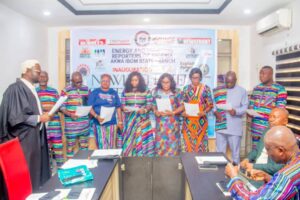
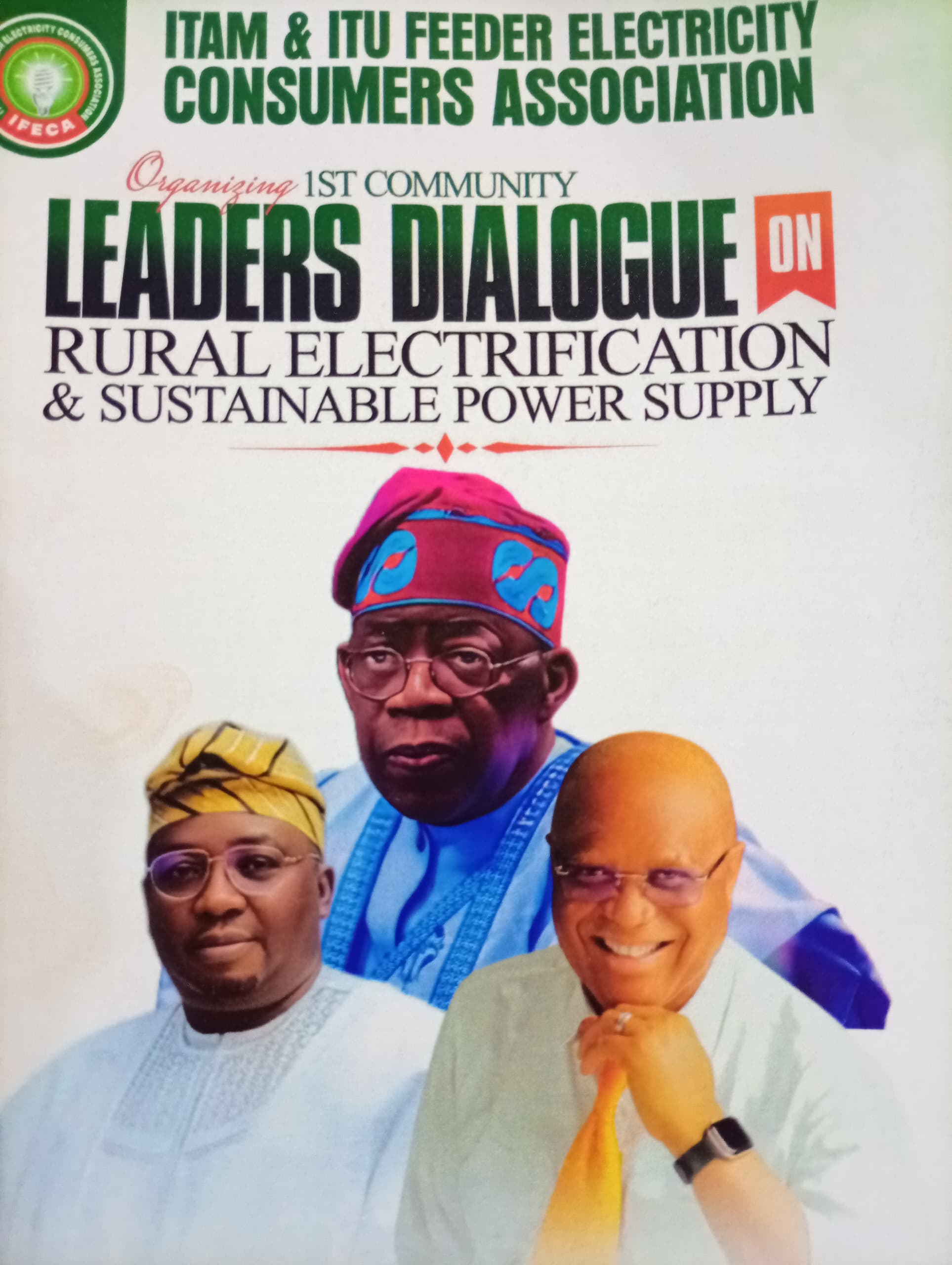
The dialogue, organised by the Itam & Itu Feeder Electricity Consumers Association (IFECA), was held Friday at the Civil Service Auditorium, Idongesit Nkanga Secretariat. It marked the association’s first state-wide engagement on rural electrification and reliable power.
In his address, Chief Ubong Akpan, Chairman, Board of Trustees of the Itam & Itu Feeder Electricity Consumers Association, said the meeting was intended to aggregate citizen input into a practical roadmap for rural electrification in Akwa Ibom. He noted that follow-up engagements would be held to track progress on repairs, community safeguarding of assets, and improved service delivery.
He stressed the need to address pressing issues that affect not only individual lives but also the economic and social development of rural areas.
“Akwa Ibom State generates over 191 MWh of electricity from the Ibom Independent Power Plant. However, despite this remarkable electricity infrastructure in the State, only 280 villages out of 2,664 can boast sustainable power supply,” Chief Akpan stated.
His statistics revealed that more than 80 per cent of rural communities are suffering from inadequate supply, with many of them having no power at all.
Identifying challenges such as inadequate infrastructure, vandalism, and unreliable supply, IFECA, through its Chairman, proposed that electricity infrastructure such as transformers should be provided to rural communities, especially those yet to be connected to the national grid. The association also recommended the replacement of dilapidated transformers with new ones, as well as the installation of concrete poles to improve the situation.
He further spoke on the need to invest in renewable energy, upgrade existing infrastructure through grid modernisation, implement off-grid systems to reach remote communities, and provide reliable power.
“Let us promote energy-efficient practices and technologies to reduce consumption and waste, while engaging local communities in planning and implementation to ensure their needs are met and their concerns addressed,” he said.
Charging stakeholders, Chief Akpan encouraged the development of targeted policies and programmes to address the unique challenges of rural electrification. He also called for strong public-private partnerships to leverage expertise, resources, and innovation.
The association urged the State Government to take advantage of the amended Electricity Act 2023 by domesticating it into state law, noting that it would facilitate the unbundling of the electricity sector to enable the state to generate, transmit, and distribute power to its consumers.
Notably, the association, being a committed agent for sustainable power supply, is one of the facilitators of the near 24-hour electricity currently enjoyed in Itu, Uruan, Ibiono Ibom, and parts of Uyo.
IFECA commended President Bola Tinubu for his determination in the power sector, and His Excellency Pastor Umo Eno, Governor of Akwa Ibom State, for driving the ARISE Agenda and the Renewed Hope Agenda — policies designed to improve electricity supply in the state.
Meanwhile, Nigeria’s Minister of Power, Chief Adebayo Adelabu, represented by an official of the Federal Ministry of Power, Engr. Eugene Egeregbe, acknowledged the concerns raised by residents of Akwa Ibom. In his paper presentation, titled “Power: A Catalyst for Economic Development”, he noted that the ministry would consider the submissions made at the forum.
He maintained that the power sector has improved in recent years and that the ministry is currently expanding the grid network in most parts of the nation, especially in areas with industrial clusters, through the construction of 330KV DC and 132KV DC lines and substations to boost electricity.
The Power Minister also disclosed how the Ministry is addressing the metering gap, aiming to improve revenue collection and restore trust in the power sector. He emphasised the need for energising education programmes while drawing attention to the rampant vandalism of critical power infrastructure, widespread electricity theft, and chronic non-payment of bills.
However, according to him, the Ministry is committed to being people-centred, reform-driven, and results-based, and pledged support for the association towards ensuring better and sustained power supply.
Also speaking were Engr. Owoyomi Ademola, who spoke on Rural Electrification Agency Accelerating Energy Access in Akwa Ibom State, and Engr. Emmanuel Akpa of the Transmission Company of Nigeria on Sustainable Power Supply and the Effect of Sabotage. They highlighted the sad stories of rural dwellers regarding power supply, maintaining that the long-decried situation would soon be addressed.
In her goodwill message, Director General of the Akwa Ibom State Broadcasting Corporation, Mrs Imaobong Udoh, commended the organisers of the meeting, describing it as a timely intervention and an opportunity to share knowledge and provide practical solutions for Akwa Ibom people. On behalf of AKBC, she donated thirty minutes of free airtime to IFECA to create more public awareness on sustainable and rural electrification.
In their goodwill messages, the Commissioner of the Niger Delta Development Commission, Hon. Abasiandikan Nkono, represented by Mrs Comfort Williams, Special Assistant in Project, described the electricity situation as problematic and difficult, while assuring future partnership with IFECA. Chief Felix Edem, a village head from, appealed for modification of the power supply system as well as even distribution of meters.
During the interactive session, participants from various local government areas recounted prolonged outages and dilapidated infrastructure, lamenting decades of darkness in some communities, including parts of Eket and Ibeno.
A contributor from Ikot Etim in Ukanafun LGA, Mr Charles Udo-Okure, reported that some neighbourhoods had been without electricity for more than ten years, with vandalised facilities left unrepaired and little visible intervention.
Speakers called for coordinated action by government, distribution companies, and host communities to restore damaged assets, protect installations from vandalism, and ensure transparent communication on timelines for reconnection.
They emphasised that dependable power is essential for community development, small businesses, and basic social services.
The event featured a panel discussion session on the topic, “How to Improve Sustainable Power Supply in Akwa Ibom State,” and many other activities ending the meeting.