

By Julius Nsikak
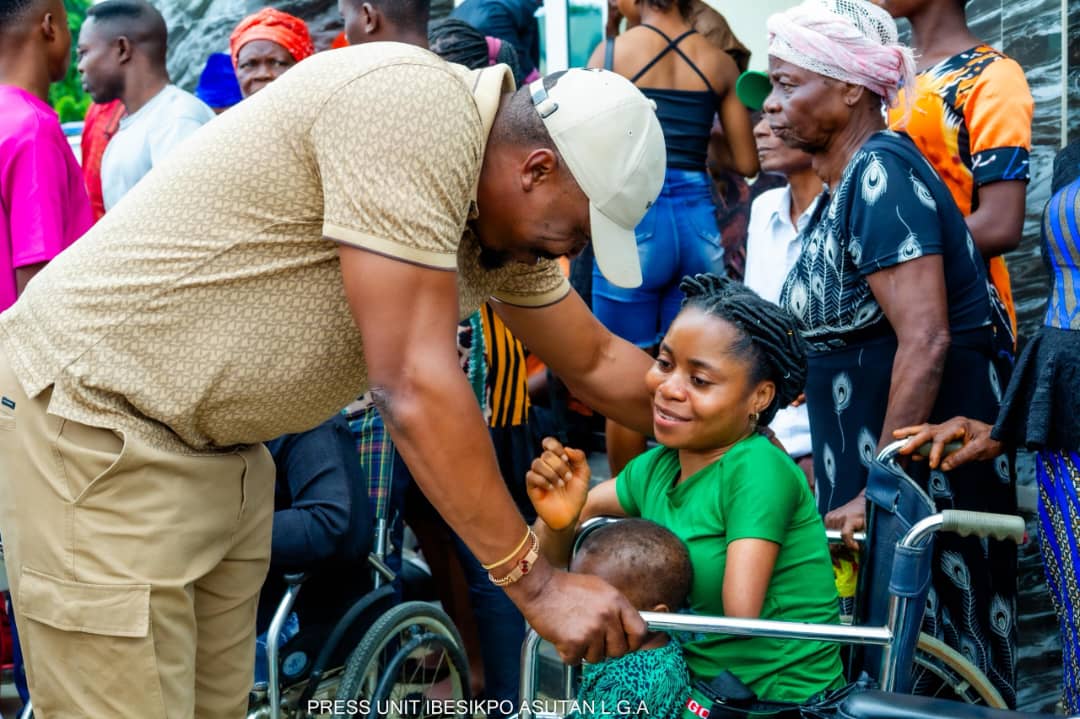
Rt. Hon. (Evang.) Edidiong Inyang, Chairman of Ibesikpo Asutan Local Government Council, was recently captured in photographs extending empathy to Persons with Disabilities (PWDs) in his area, distributing a 10-kilogramme bag of rice and a few envelopes.
On the surface, this gesture may appear laudable, a sign of compassion and an attempt to provide temporary relief to a vulnerable group. Yet, beneath the smiles and photo opportunities lies a deeper question: how sustainable are such interventions? Are they empowerment, or merely short-lived palliatives?
Need Assessment: Was It Done?
The fundamental issue begins with data. Did the council conduct a needs assessment of the PWD community? Was there a comprehensive register of beneficiaries, or were the recipients hand-picked for the day’s exercise? Without reliable data and proper consultation, such gestures risk being cosmetic rather than transformative.
If empowerment is the goal, it must move beyond ad hoc distribution. True empowerment requires inclusivity, not just for a selected few, but for the wider PWD community. Anything less only reinforces exclusion, leaving many to remain “sit-at-home” members of society.
The Question of Sustainability
Handouts like rice and envelopes may provide temporary comfort, but they do not address the structural disadvantages faced by PWDs. Empowerment should not be seasonal charity; it should be about building capacity, access to education, skills training, healthcare, mobility aids, and sustainable livelihoods.
In Akwa Ibom State, policies aimed at PWDs remain poorly structured, often trapped in political tokenism rather than long-term strategy. The sustainability of empowerment lies in integrating PWDs into governance and economic planning, ensuring they are not remembered only when politicians need publicity.
What Should Be Done?
To move from charity to true empowerment, local governments, including Ibesikpo Asutan must:
Conduct proper data collation and needs assessments to understand the real challenges facing PWDs in each community.
Create inclusive empowerment programmes that go beyond food sharing, focusing on vocational training, start-up grants, and skill acquisition centres tailored to PWDs.
Provide access to assistive tools such as wheelchairs, hearing aids, and digital learning devices.
Integrate PWDs into decision-making structures by appointing them into boards, committees, and advisory roles at the local government level.
Establish long-term welfare and empowerment policies that are budgeted for annually, rather than left to the goodwill of individual politicians.
The Council Chairman’s act may be commendable for its symbolism, but symbolism is not strategy. The jury, therefore, is not the journalist’s, it is the community’s.
Will the narrative of PWD empowerment in Ibesikpo Asutan remain defined by bags of rice and brown envelopes, or will it evolve into a model of inclusion, dignity and sustainability?