
By Julius Nsikak
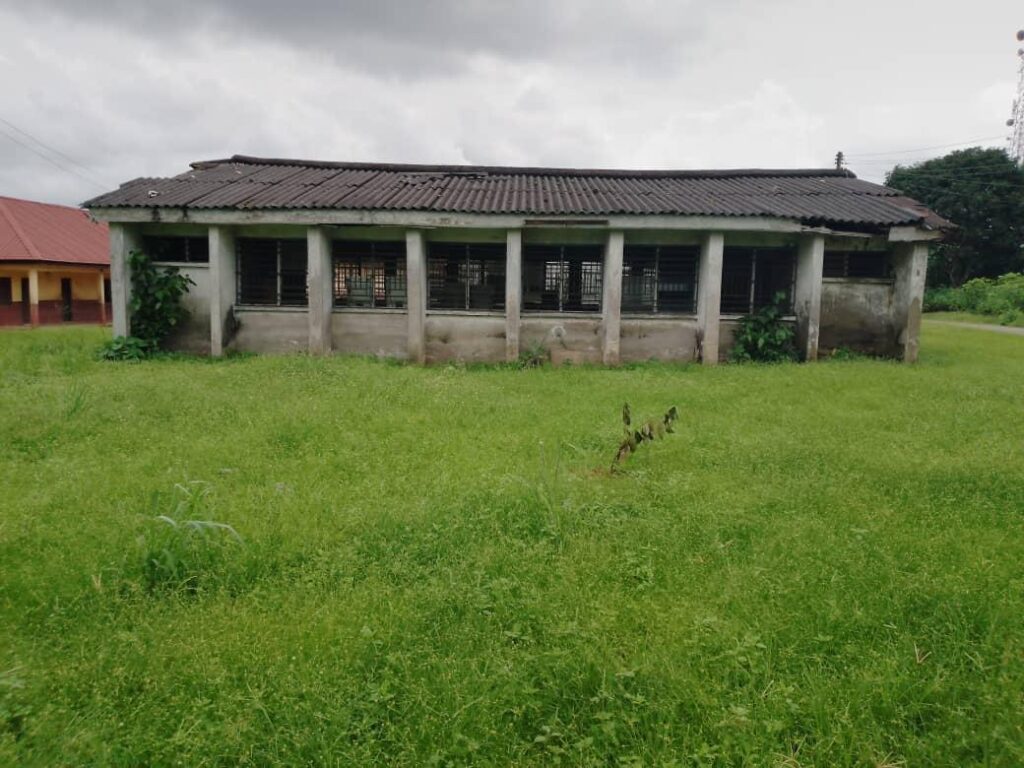
Once a beacon of discipline and academic excellence in Akwa Ibom State, Etinan Institute at 110 now stands in alarming decline. A recent homecoming by the Etinan Institute Old Students’ Association exposed the depth of decay within the historic school, including crumbling classrooms, unsafe dormitories, non functional laboratories and a crippling shortage of teachers, revealing decades of sustained neglect by successive governments.
Founded in 1915 and renowned for producing some of Nigeria’s most distinguished leaders, the century old institution today struggles to offer even the most basic learning conditions to its growing student population. While alumni and private interventions have provided limited relief, stakeholders insist these efforts cannot replace government responsibility, warning that without urgent public investment and accountability, Etinan Institute risks losing its legacy to irreversible decay.
Etinan Institute Old Students’ Association, ETINOSA, at the celebration of their homecoming were confronted with the grim reality of the state of affairs in the institute. The dilapidated infrastructure, quality of learning and teaching were some the realities that brought tears to members of the association.
The once revered institute has become a shadow of itself, it now battles with severe decay on all fronts. Obviously the institute has been neglected by successive administration. This abandonment by government was adjudged by members of the association as deliberate with fingers pointing to government officials who have refused to attend to the needs of the school.
Established in 1915 by Irish missionary Samuel Bill as a boys’ institute, Etinan Institute is recognised as the first post primary institution in Central Ibibio land, located in Etinan Local Government Area of Akwa Ibom State. It later taken over by government and became government owned secondary school, which many see as the beginning of the decay of the institute.
Beyond its academic mandate, the institute played a central role in the socio-religious and economic development of the area, serving initially as a training ground for preachers of the Qua Iboe Church and later evolved into producing generations of distinguished Nigerian leaders. For decades, it symbolised discipline, quality education and communal pride.
The space occupied presently by the institute was bequeathed to Qua Iboe Mission by a Presbyterian minister who willed that part of his estate as a school for the education of West Africans under the Qua Iboe Mission. Negotiations for the execution of the will were conducted through Rev Kirk on behalf of Rev Bill, who was then on leave overseas. Mr Robert James Taylor, who later became the first Principal, was contacted during the process. The school was first established in 1891 at Okat in present day Onna Local Government Area as Qua Iboe Mission Boys’ Institute. It initially functioned as a special primary school before relocating in 1896 to Nditia in Ibeno and later to Ikot Edong in Abak. After operating for several years, the institution was shut down, only to be reopened in 1915 as Boys’ Institute, Etinan, and later became Etinan Institute.
At inception, the primary objective of the institute was to prepare pupils for evangelistic and teaching work within the expanding Qua Iboe Church organisation. The school began with 30 pupils, many of whom were village preachers and already engaged in teaching at local schools. Some were even older than the first Principal of the school, arriving the boarding house with personal house boys. Teaching commenced in a single structure comprising a large hall and two classrooms, with mud dormitories. Consequently, for about two years, Mr Taylor served as the sole teacher, occasionally assisted by pioneering students. Over time, the school expanded academically and structurally, adopting the government syllabus before developing into a full secondary.
It became co-educational in 1949, having admitted its first female pupils in 1942 through a teacher training programme. By the mid twentieth century, Etinan Institute had established itself as a premier institution in the region.
The institute has produced some of Nigeria’s most distinguished leaders in government, academia, public service and the military. Its alumni include Brigadier General Udokaha Jacob Esuene, pioneer Military Governor of the South Eastern State, Obong Akpan Isemin, first civilian Governor of Akwa Ibom State, Group Captain Idongesit Nkang and Group Captain Sam Enwang, former military governors, Obong Ufot J Ekaette, former Secretary to the Government of the Federation, and renowned scholars such as Professors Sunday Peters, Monday Abasiattai, Ime Ikiddeh and Akpan J A Esen, amongst many others.
However, the school’s fortunes began to significantly decline in the 1990s. Sources attributed this downturn largely to prolonged government neglect, as growing student enrolment was not matched with infrastructural development or maintenance.
Classrooms deteriorated, dormitories fell apart, quality staffing dropped and basic amenities collapsed.
Today, the physical condition of Etinan Institute presents a disturbing picture. Most classrooms lack doors and functional windows, while leaking roofs and cracked walls expose students to harsh weather conditions. Dormitory beds still in use were provided in the 1970s, and the school fence has largely collapsed, leaving the school compound unsafe, decrepit administrative building certainly instilling discipline will be difficult to enforce. Despite having one of the largest student populations among public secondary schools in Akwa Ibom State, the institution remains grossly under funded.
Although some interventions have occurred over the years, including donations of science equipment by ExxonMobil, laptops and solar powered ICT facilities by the Nigerian Communications Commission and an 18 seater bus by the Parents Teachers Association, these efforts have failed to address the scale of decay in the school. One wonders how the school would have been if these interventions had not come?
The recent ETINOSA homecoming allowed members see first hand the level of decay in the school. The association’s president, Rev Efretuei Akaduh, described the state of the school as the result of long standing systemic neglect and politicisation of education.
He said, he inherited a dormant alumni body weakened by mistrust due to years of abandoned projects and unfulfilled promises. However, under his leadership, ETINOSA will focuse on rebuilding confidence, accountability and collective action, culminating in a fundraising initiative aimed at renovating the administrative block.
The President stressed that, alumni efforts cannot replace government responsibility, noting that students still rely on pit latrines, dormitories lack electricity, teachers’ quarters are absent and academic staffing remains dangerously inadequate. “The institute has just 26 teachers serving over two thousand students.”
Speaking in the same vein, Mr Ubong Nelson, chairman of the 110th anniversary and Homecoming 2025 organising committee, described the poor turnout at the fundraising event as embarrassing, lamenting the weak culture of giving amongst alumni who now occupy influential positions. He argued that a school with such a pedigree should not be left to decay, insisting that education remains a core public responsibility.
Another alumnus, Engr. Edet Ikpeme, who attended the school between 1982 and 1988, recalled the era of strict discipline, functional facilities and strong moral instruction. He described the current condition as evidence of prolonged neglect and called for urgent government intervention, while also urging alumni and the host community to take shared responsibility.
Also speaking to journalists, the Senior Special Assistant to the Governor on Research and Documentation, Dr Essien Ndueso, argued that responsibility for public institutions should not be placed solely on government.
He maintained that government exists at multiple levels and is a product of the people’s collective will, insisting that society has a duty to protect institutions from which it benefits.
Dr Ndueso described Etinan Institute as one of the oldest schools in Akwa Ibom State and noted that it has produced leaders of national and international relevance.
He was optimistic that, sustained advocacy would attract interventions from local, state and federal authorities.
Offering a more critical moral assessment, a former Head Girl of the 1985 set, Mrs Victoria Udom, blamed the decline of the school on weakened discipline, poor maintenance culture and community indifference. She recalled a period when students were actively involved in maintaining cleanliness and order through structured discipline.
She questioned the growing tendency to attribute all maintenance responsibilities to government, arguing that basic environmental upkeep such as clearing bushes around the dormitories should involve students and the host community.
She expressed disappointment at the host community’s limited engagement, noting that old students from outside Etinan appeared more committed to the school’s welfare than them.
Mrs Udom acknowledged government’s role in funding infrastructure but warned that without discipline, community ownership and accountability, such investments would continue to fail, reflecting a broader neglect of public education values.
In his assessment, the Principal of Etinan Institute, Elder Bassey Uwah, who assumed office in September 2022, acknowledged the depth of the infrastructural challenges but highlighted key interventions driven by the Old Students’ Association.
These include the renovation of the female hostel, installation of solar lighting for reading areas and hostels, and the provision of a solar powered borehole that now supplies water throughout the day.
He confirmed that most structures date back to over a century and have suffered extensive wear, adding that while the government has promised further renovations, the lack of a functional perimeter fence remains a serious security concern.
The most sobering account came from the students themselves.
Speaking on behalf of the student body, the Senior Prefect , Daramfon Sunday Akpan, an SS3 student, described daily life in the school as harsh and discouraging. He said most dormitories have broken doors and shattered windows, lighting is absent in hostels and the dining hall, and students still depend on pit toilets due to insufficient modern facilities, adding that laboratories are non functional, computers lie unused, classrooms lack ceilings and ventilation, and the acute shortage of teachers has made effective learning nearly impossible.
For an institution that once stood as a beacon of educational excellence, Etinan Institute today stands as a haunting symbol of abandonment, a century old legacy left to decay in full public view.
This report was first published on 13/1/2026 by TheMail Newspaper.